| Recent Comments |
| Categories |
| Archives |
| Tags |
Sunday, 28 February 2021
Last week I did some more work on my new composition. I slightly changed the Hammond solo and composed the guitar solo which is played on this recording by my son, Bas van Kampen. I also got the structure of the drum track in agreement with the structure of the song; The next step is to change the drums according to the bass groove and arrangement.
I also continue to have a closer look at various concepts (peaks, rms, loudness) involved in gain staging and metering in Cubase. These are also important for volume calibration as we have seen with the K-(N) system.
Thursday, 20 February 2021
Last week I calibrated the listening levels in my studio using the K-(N) system. See here for more details.

In the mean time I have improved my Sound Performance Index (SPI) on SoundGym.
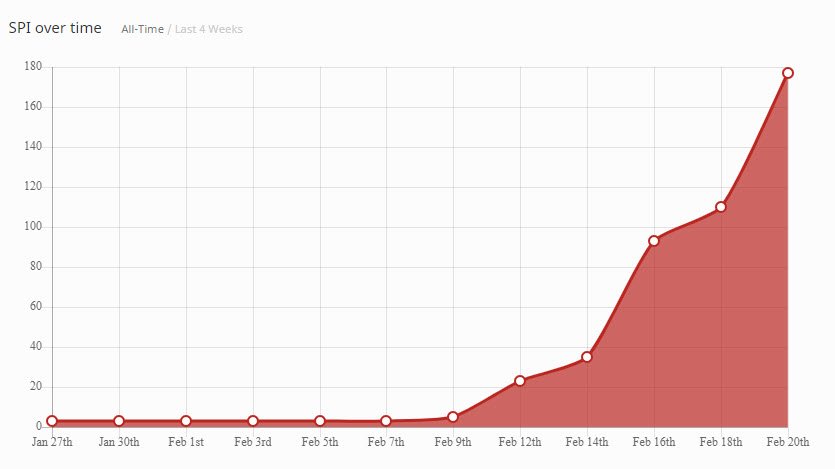
SPI is a ranking calculated from all your audio game scores. SPI helps you compare your strengths and weaknesses across games that challenge different listening skills. SPI is calculated by the 3 top scores in each game. The high-score provides you x3 points, the second score x2, and the third x1. As you pass levels you will get more points for a correct answer and your, resulting with higher game scores and higher SPI. I do not know (at this moment) what the highest score on SoundGym is but there are persons with an SPI of one million and higher!!
Thursday, 01 February 2021
I preparation to calibrate for listening levels I installed Mackie Big Knop Passive that allows an easy control of the HS5/HS8S volume.


Mackie Big Knob Passive (Operation Manual) (pdf) 1.10 MB 257 downloads
Mackie Big Knob Passive (monitor controller) See also: Monitoring ...Tuesday, 09 February 2021
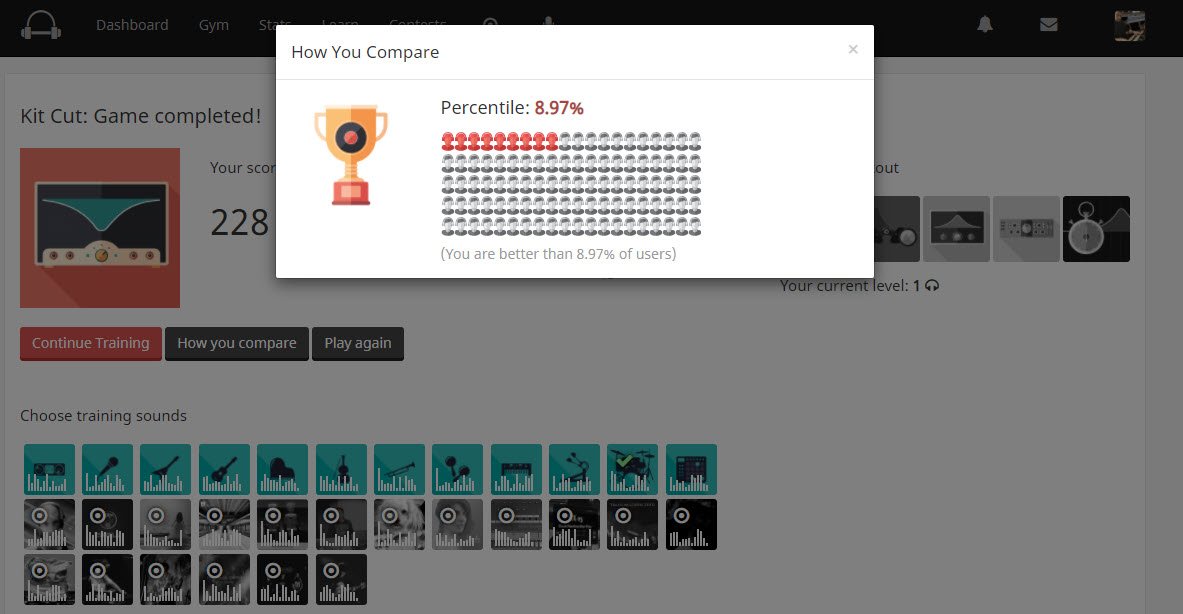
My very first workout with SoundGym. Already I am better then 8.97% of the world population in recognizing frequency attenuations!
Sunday, 07 February 2021
It has been a busy month……. I have bought a Stream Deck XL to control Dorico, Cubase, and possibly other music software. Still need to do some more configuration for Cubase but need to find some time for it.

Since the acoustics of my studio room is far from perfect, I decided to attempt to do a mix on my headphones (Sennheiser HD650). The HD650 has a quite flat frequency response but is not perfect. I intend to use it with Reference 4 (headphone edition) from Sonarworks, which removes unwanted coloration from the HD650 using a specific profile to flatten the frequency response. I use the profiles for the Sennheiser HD650 and the Sony WH-1000XM3 See also the review in SoundOnSound. Sonarworks allows you to send in your headphone for an individual calibration. I didn’t do that and probably wouldn’t notice the difference anyway.
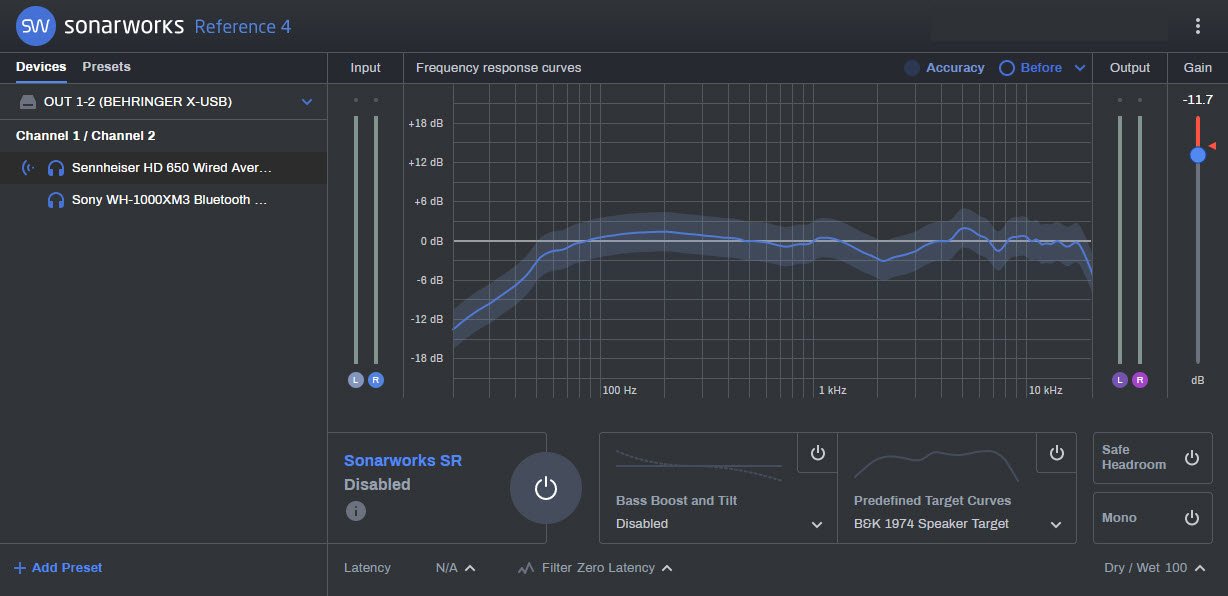
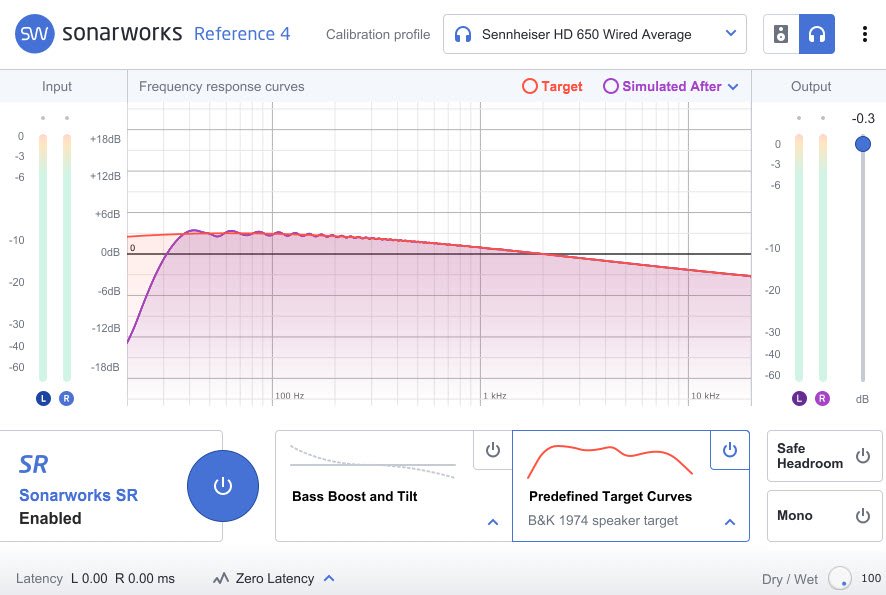
Reference 4 also includes the B&K 1974 Speaker target, which is a target curve devised for hi-fi speakers by Bruel & Kjaer in 1974. This target (red curve below) reflects the HF attenuation found in many domestic systems to compensate for room reflectivity.
Whitepaper Sonarworks Reference 4 Headphone edition (pdf) 3.95 MB 211 downloads
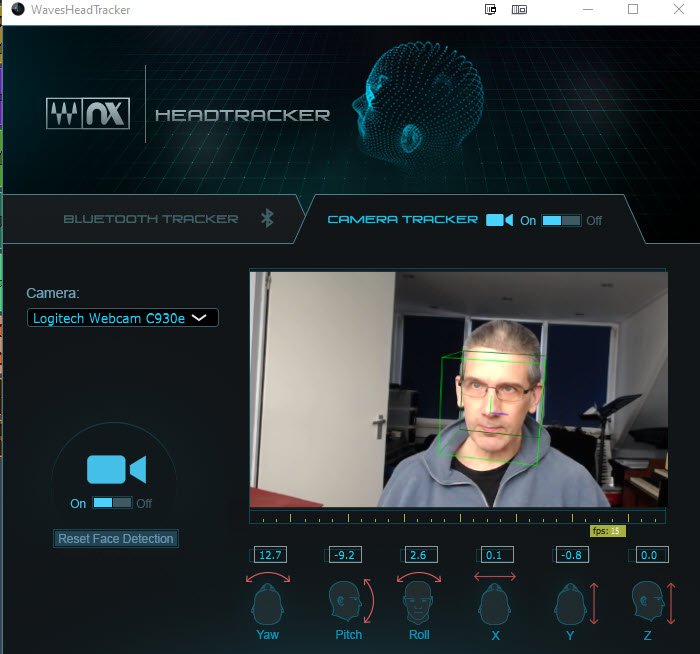
See also: Acoustics ARC System ...In addition to Sonarworks Reference 4, I also bought the Waves Nx Ocean Way Nashville. The Nx Ocean Way Nashville plugin replicates the acoustics and monitoring system of the Ocean Way Nashville control rooms, over any pair of studio headphones to create better mixes. Ocean Way Nashville’s studio control rooms are the pinnacle of acoustic design and studio monitoring. The Nx Ocean Way plugin recreates the studio’s acoustics and HR1/HR5 monitors, in immersive spatial audio. Mixes monitored on headphones through the Nx Ocean Way Nashville plugin are more likely to translate accurately to multiple audio systems and platforms – without the issues that often plague mixes created on headphones. Nx Ocean Way Nashville supports head tracking via a webcam or the dedicated Waves Nx Head Tracker Bluetooth device for enhanced realism of the immersive three-dimensional effect.
Here you see how the Nx plugin tracks my head using the webcam:
To allow easy easy referencing of my in progress mixes to other mixes or songs, I will use Reference 2 from Mastering the Mix. This plugin allows to compare the EQ balance, stereo width and compression to one or more reference tracks.
I will do a next mix (Carolina in the Pines from Pretty Saro) with the HD650, Sonarworks Reference 4, Ocean Way Nahsville plugin, and to see if this results in a mix that is better and translates better compared to mixing on only my Yamaha HS5/HS8 monitors.
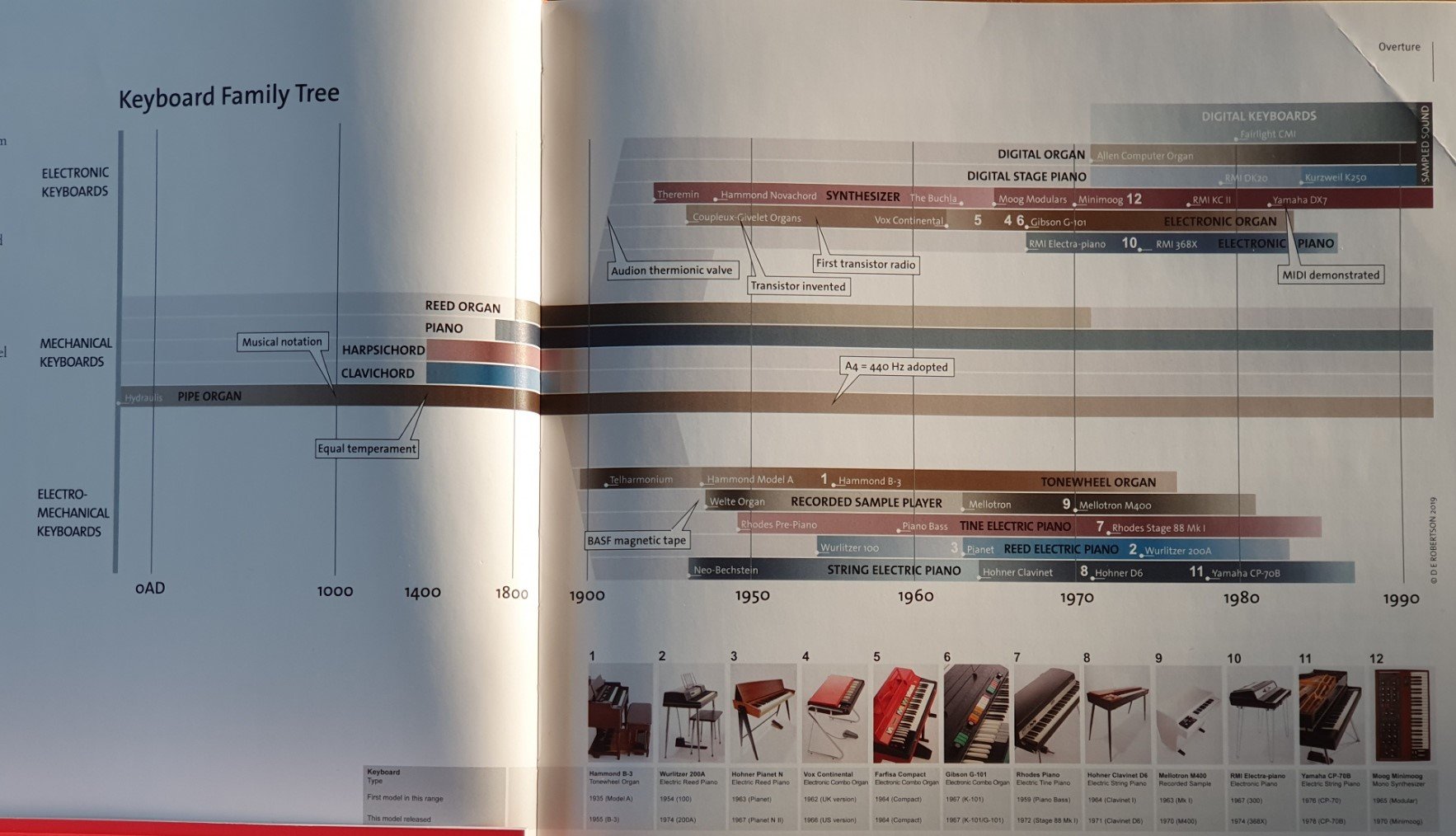
In addition to mixing on headphones, the coming week I will calibrate the volume of my monitors using the K-20 system. Will report on that next time. I added a nice figure (Keyboard Family Tree) to Classic Keys. I also started in a new book to improve my mixing skills: Mixing with Impact.
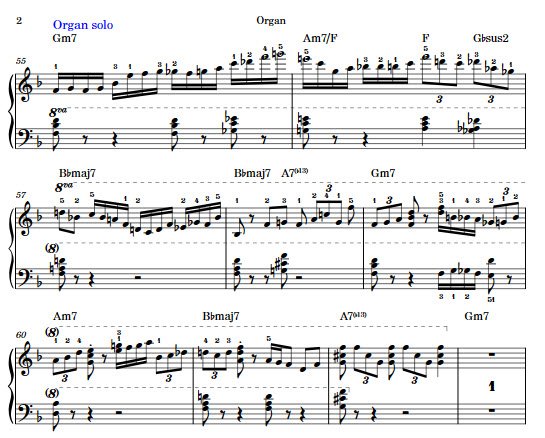
On the 3rd of January I noticed that I was working on a new song (yet without a name). I have finished most of the structure now and can start recording. I did a first quick recording of the Hammond Solo to give an impression how it will sound like. Below also the score.
Finally, I decided to enter a vocational study about Audio Technology (recording, mixing, mastering, and much more) from SoundEducation. This will start in September and will run for one year including many practical sessions. I am looking forward to this. However, in preparation this course already started with exercises to improve listening skills such as recognizing frequencies. We have been given an account at SoundGym for this training.